Gearboxes, diesel and machinery
Gear oil GL-4 vs GL-5: manual gearboxes and axles
Where the difference lies
In gears, metal surfaces slide against each other under very high pressure. The sulfur-phosphorus EP (extreme pressure) additives in the oil form a protective layer on the surface and prevent scuffing of the teeth.
GL-4 | GL-5 | |
|---|---|---|
EP additive content | moderate | roughly twice as much |
Main use | manual gearbox, transaxle | hypoid final drive, axles |
With yellow metals (brass, bronze) | safe | can corrode when hot |
Effect on synchronizers | designed for them | can be too slippery |
Manual gearbox synchronizers are often made of brass or bronze. The active additives in GL-5 can slowly wear them away, and the extra slipperiness can make gears hard to engage. In a hypoid axle it is the other way round: GL-4 protection is not enough.
Which goes where
- Manual gearbox of a front-wheel-drive car: usually GL-4.
- Rear axle, hypoid final drive: GL-5.
- Truck gearboxes and axles: depends on the manufacturer's requirement; axles usually take GL-5.
- Limited-slip differential (LSD): needs an oil with a special additive; plain GL-5 may not be suitable.
The exact requirement is in the car's manual. On the label of some oils GL-4/GL-5 are written together; such a product has passed both tests.
What 75W-85 and 80W-90 mean
The viscosity of gear oils is graded by a different standard, SAE J306. The numbers are higher than for engine oil, but that does not mean the oil is that much thicker: the scale is different. For example, a 75W-90 gear oil is close in viscosity to roughly a 10W-40 engine oil.
- 75W-85, 75W-90: flows well in the cold, gears engage easily even when cold; usually synthetic.
- 80W-90: the most common multigrade class.
- 85W-140: for heavily loaded axles and hot conditions.
In the KORTEX catalog
- Gear Oil 75W-85 GL-4: synthetic; for manual gearboxes and transaxles of front-wheel-drive cars.
- Gear Oil 80W-90 GL-4: for manual gearboxes.
- Gear Oil 80W-90 GL-5: for heavily loaded hypoid axles; in 4, 20 and 200 liter containers.
All three products are intended for units without a limited-slip differential.
FAQ
I put GL-5 in instead of GL-4. What should I do?
If the manual lists only GL-4, it is better to change the oil. The damage does not happen in a day, but over the long term wear of the synchronizers can speed up.
Can I use engine oil instead of gear oil?
Only if the manual calls for it; some older gearboxes did. Otherwise no: engine oil does not have enough of the EP additives that gears need.
Sources
- API Publication 1560 — gear oil classes (GL-4, GL-5)
- SAE J306 — Automotive Gear Lubricant Viscosity Classification
- KORTEX product labels
Related products
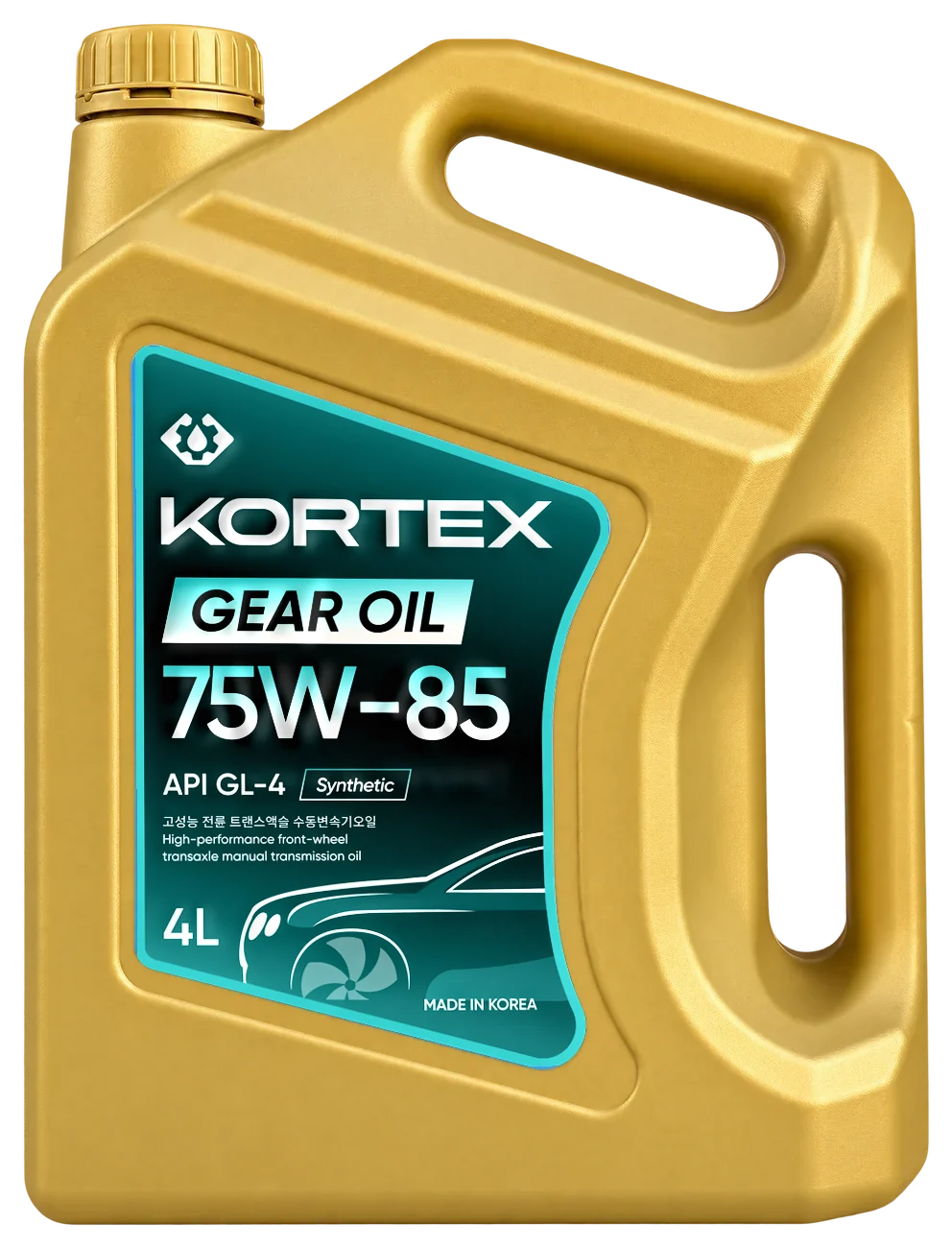
Gear Oil 75W-85 API GL-4
API GL-4
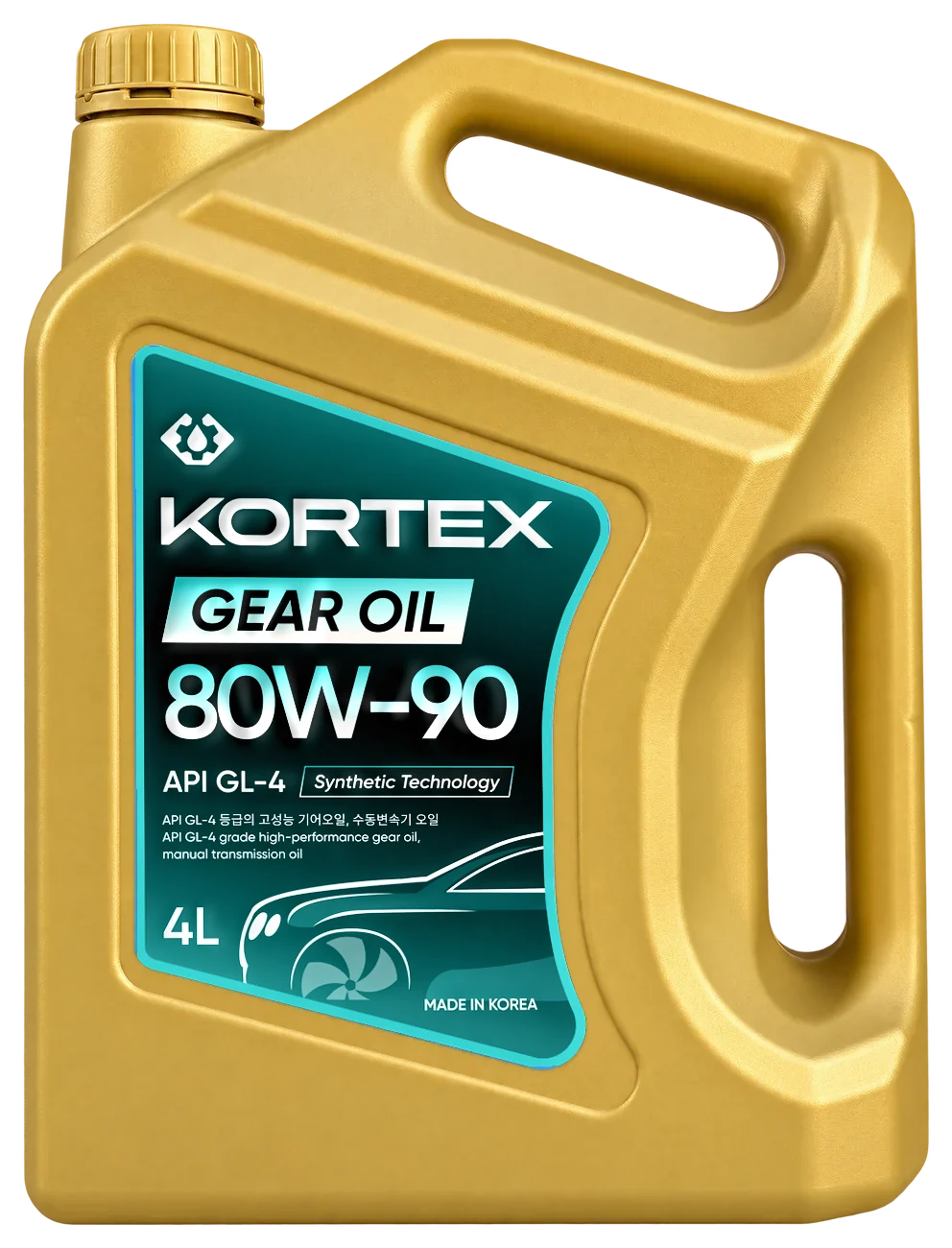
Gear Oil 80W-90 API GL-4
API GL-4
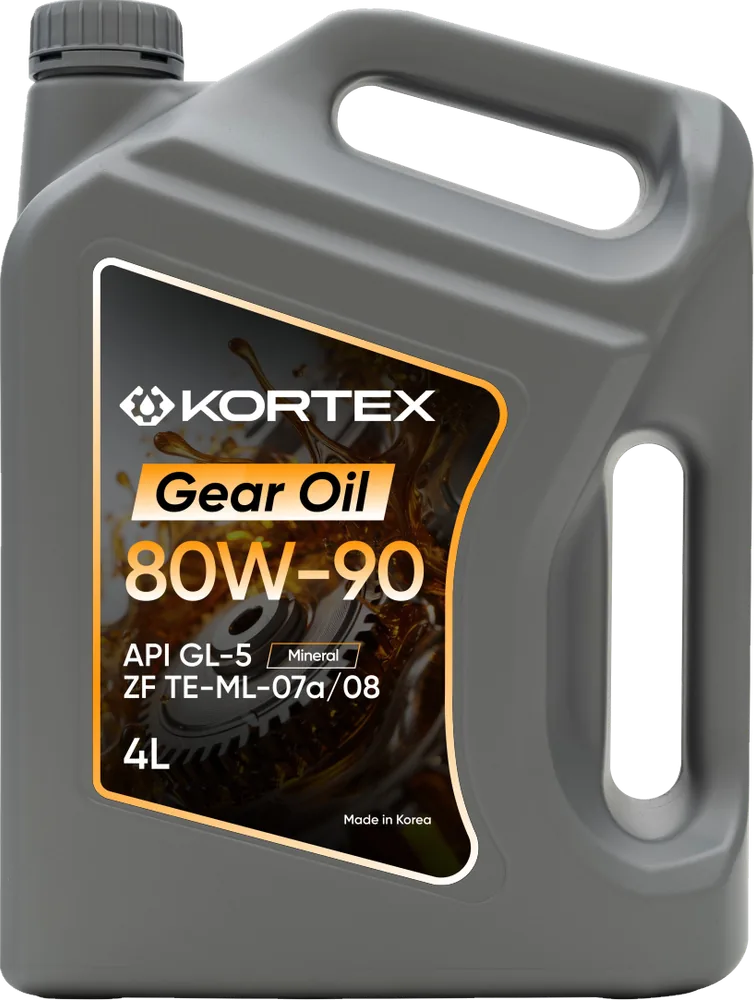
Gear Oil 80W-90 API GL-5
API GL-5
Still have a question?
Our manager will help you choose an oil.