Gearboxes, diesel and machinery
Hydraulic oil ISO VG 32, 46 and 68: how to choose
What ISO VG means
The ISO 3448 standard divides industrial oils into classes by kinematic viscosity at 40 °C. The class number is the midpoint, with a permitted deviation of ±10%.
Grade | Viscosity at 40 °C, mm²/s |
|---|---|
ISO VG 32 | 28.8 – 35.2 |
ISO VG 46 | 41.4 – 50.6 |
ISO VG 68 | 61.2 – 74.8 |
ISO VG 100 | 90 – 110 |
Unlike the SAE grades for engine oil, there is a single temperature here, 40 °C. Oil thins as it heats, so when choosing, the real working temperature of the system is taken into account.
HLP, HM, HVLP: what the letters mean
Mark | Standard | Meaning |
|---|---|---|
HL | DIN 51524-1 | with rust and oxidation inhibitors |
HLP | DIN 51524-2 | HL plus anti-wear additives |
HM | ISO 11158 | the international equivalent of HLP |
HVLP / HV | DIN 51524-3 / ISO 11158 | HLP/HM plus a high viscosity index: it thins less when the temperature changes |
AW | — | anti-wear; in practice corresponds to HLP/HM |
Modern equipment with pumps working at high pressure calls for at least the HLP/HM class.
How to choose the viscosity
The pump manufacturer sets the viscosity range at operating temperature. If the oil is too thin, internal leakage increases, pressure drops and wear rises. If it is too thick, the pump cannot draw the oil in the cold (cavitation), and the system is sluggish and overheats.
Conditions | Typical choice |
|---|---|
Cold climate, indoor machine tools, presses | ISO VG 32 |
Mobile equipment in a moderate climate | ISO VG 46 |
Hot climate, heavy load, continuous work | ISO VG 68 |
Very hot conditions, slow-moving heavy units | ISO VG 100 |
This is general guidance. The manual of your excavator, loader or tractor has a table by ambient temperature; follow it. In an Uzbek summer the choice for much equipment is between VG 46 and VG 68.
The main enemies of hydraulic oil
- Contamination. A large share of hydraulic faults is linked to particles in the oil. Pour the oil from a clean container, through a filter; keep the tank cap and breather clean.
- Water. The oil turns cloudy and milky; corrosion and pump wear begin.
- Overheating. The oil oxidizes quickly and the seals harden. Check the oil cooler and that it is clean.
- Mixing. Mixing oils with different bases and additives can give foam and sludge. Use engine oil or ATF in place of hydraulic oil only if the equipment manual permits it.
In the KORTEX catalog
ULTRA Hydraulic Oil AW: in ISO VG 32, 46, 68 and 100, in a 20-liter container. The standards on the label: ISO 11158 HM, DIN 51524-2 HLP. Field of use: construction and heavy equipment, excavators, cranes, industrial hydraulics.
For fleet selection and wholesale supply: For partners.
FAQ
Can I put VG 68 in place of VG 46?
Only if the equipment manual permits VG 68 at that temperature. In summer this is often possible, while in winter thick oil can damage the pump on a cold start.
When should hydraulic oil be changed?
At the engine hours set by the equipment manufacturer. In dusty conditions and at high temperature the interval is shorter. If the oil has turned cloudy, dark or smells burnt, do not wait for the interval.
Sources
- ISO 3448 — Industrial liquid lubricants: ISO viscosity classification
- ISO 11158 and DIN 51524 — requirements for hydraulic oils
- KORTEX product labels
Related products
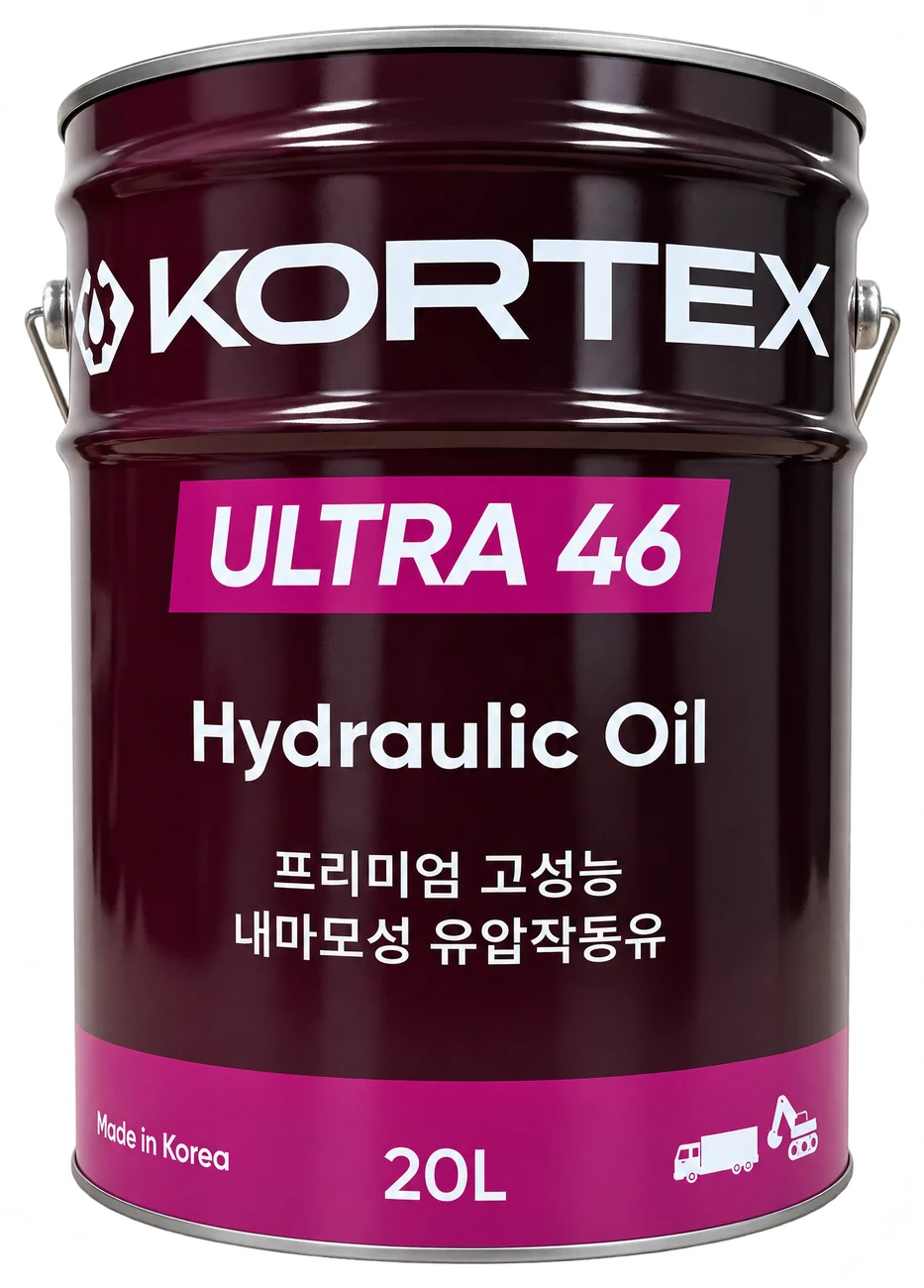
ULTRA Hydraulic Oil AW 32/46/68/100
Mineral
Still have a question?
Our manager will help you choose an oil.