Basics: grades and classes
How to read an engine oil label: the 7 things to check
1. Viscosity grade: SAE
The biggest print: 0W-20, 5W-30, 10W-40. It shows how thick the oil is and must match the grade in the manual exactly. More in how to read the SAE grade.
2. Quality class: API
For example API SP or API SQ. For gasoline engines it starts with the letter S, for diesel with C. The grade in the manual or a newer one is suitable: API grades.
3. European class: ACEA
For example A3/B4 or C3. The "newer is better" rule does not work here: the class must be exactly the one in the manual: ACEA classes.
4. Car-maker specifications
Entries such as dexos1, MB 229.5, VW 502.00. Tell two kinds of wording apart:
- official approval or license: the car maker has tested this product and put it on its list; there is usually a license number or an official logo;
- "meets the requirements of", "recommended for": the oil maker's own statement.
If the manual says the oil must carry the logo (for example dexos1 Gen 3), only the first kind counts.
5. Base type
Fully synthetic, synthetic, semi-synthetic or mineral. More on this: synthetic, semi-synthetic and mineral oil.
6. Volume and place of manufacture
Passenger car oils usually come in 1 and 4 liter containers, heavy-duty equipment oils in 20 liter ones. Find out how much oil your engine takes from the manual: for example, the Cobalt 1.5 takes 3.75 liters with the filter.
7. Batch number and barcode
The batch number is printed on the container itself and shows when the product was filled. On KORTEX containers it has the form YYMMDD-NN: year, month, day and batch sequence number. For example, 261019-01 is 19 October 2026, first batch.
The barcode (EAN-13) must match the product and volume. The KORTEX label also carries a QR code, the MADE IN KOREA mark and importer details; all of them are shown with pictures on the Verify authenticity page.
Example: comparing a label with the manual
The manual says: "SAE 5W-30, API SM or higher". The label of KORTEX RT7 5W-30 says: SAE 5W-30, API SP, ACEA A3/B4. The viscosity matches, and API SP is a newer grade than SM, so the requirement is met.
FAQ
The label lists a lot of car makes. Is that an approval?
A list of makes shows which cars the oil can be used in, but it is not an official approval in itself. What decides is whether the grade and specification from your manual are on the label.
Does oil have a shelf life?
Yes, manufacturers usually recommend using oil in a sealed container within a few years. So look at the date in the batch number and store the container in a dry, cool place.
Sources
- SAE J300, API — Oil Categories, ACEA Oil Sequences
- UzAuto Motors: Chevrolet Cobalt owner's manual
- KORTEX product labels
Related products
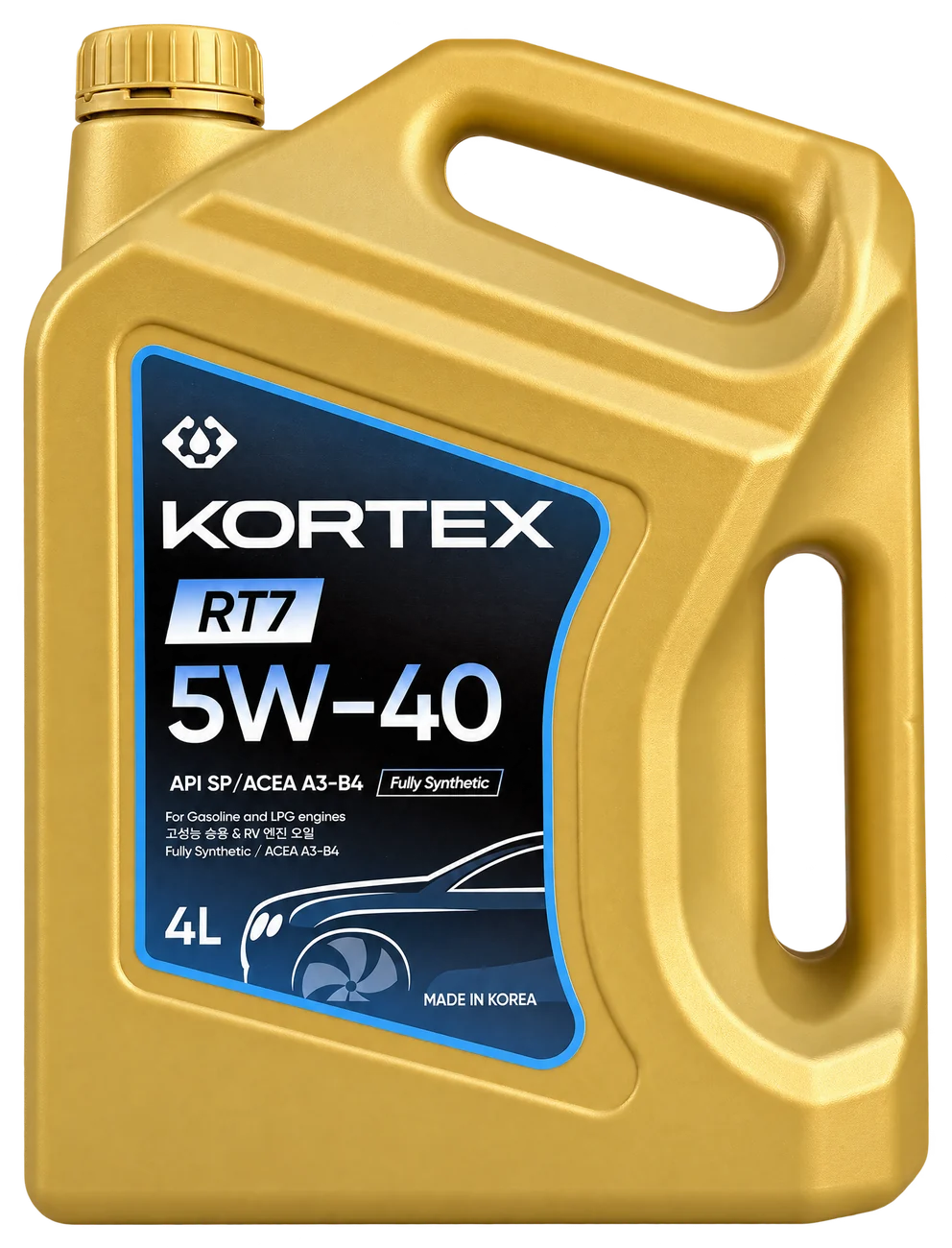
RT7 5W-40 API SP / ACEA A3-B4
API SP · ACEA A3/B4
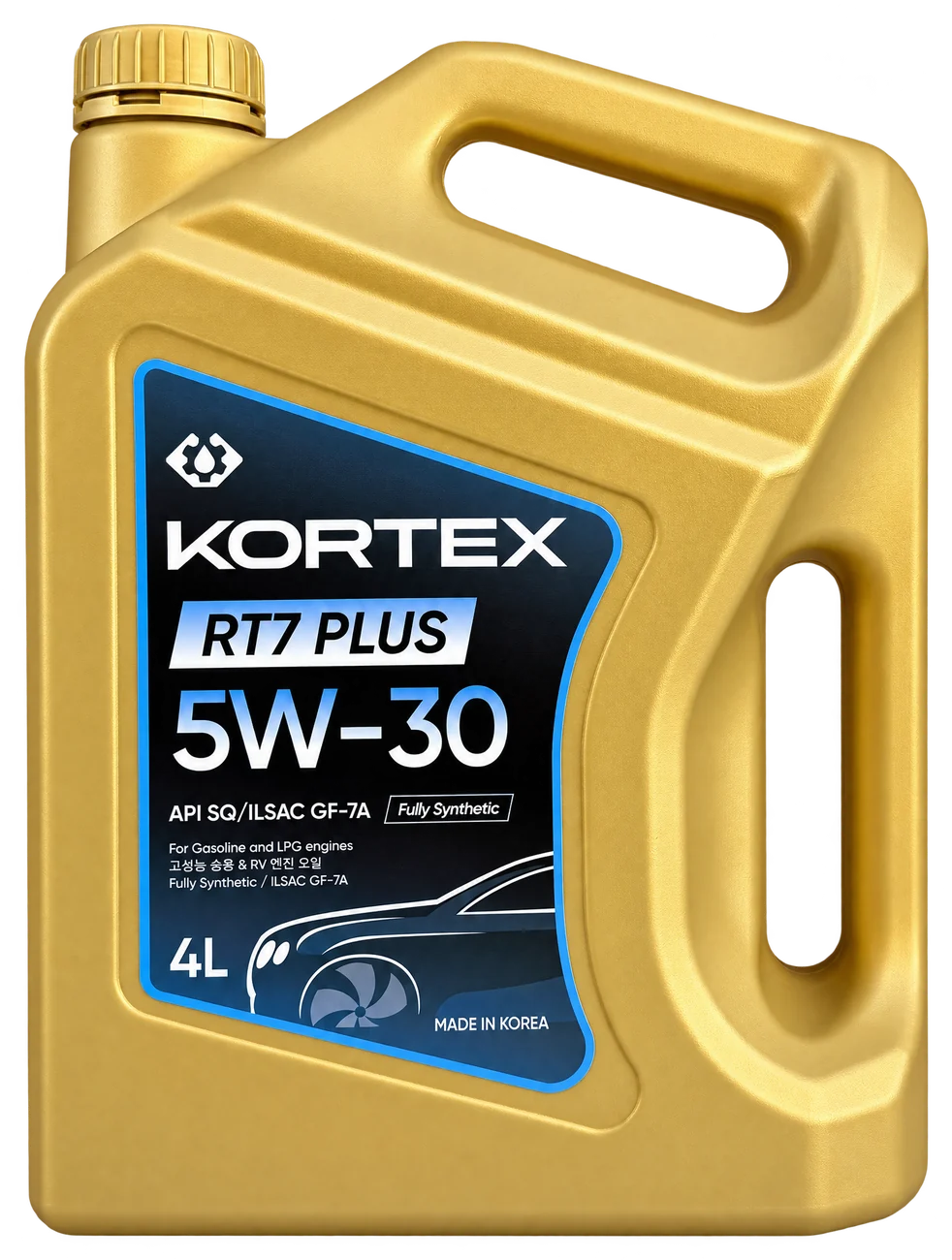
RT7 PLUS 5W-30 API SQ / ILSAC GF-7A
API SQ · GF-7A
More in this section
- What does 5W-30 mean? How to read the SAE viscosity grade
- 5W-30 vs 5W-40: what is the difference and which suits Uzbekistan's climate?
- API SN, SP and SQ explained: what gasoline engine oil grades mean
- ACEA A3/B4, C2, C3 and C5 explained: European engine oil classes
- Synthetic vs semi-synthetic vs mineral oil: what is the difference?
- What is dexos1 Gen 3 and which Chevrolet models require it?
Still have a question?
Our manager will help you choose an oil.